
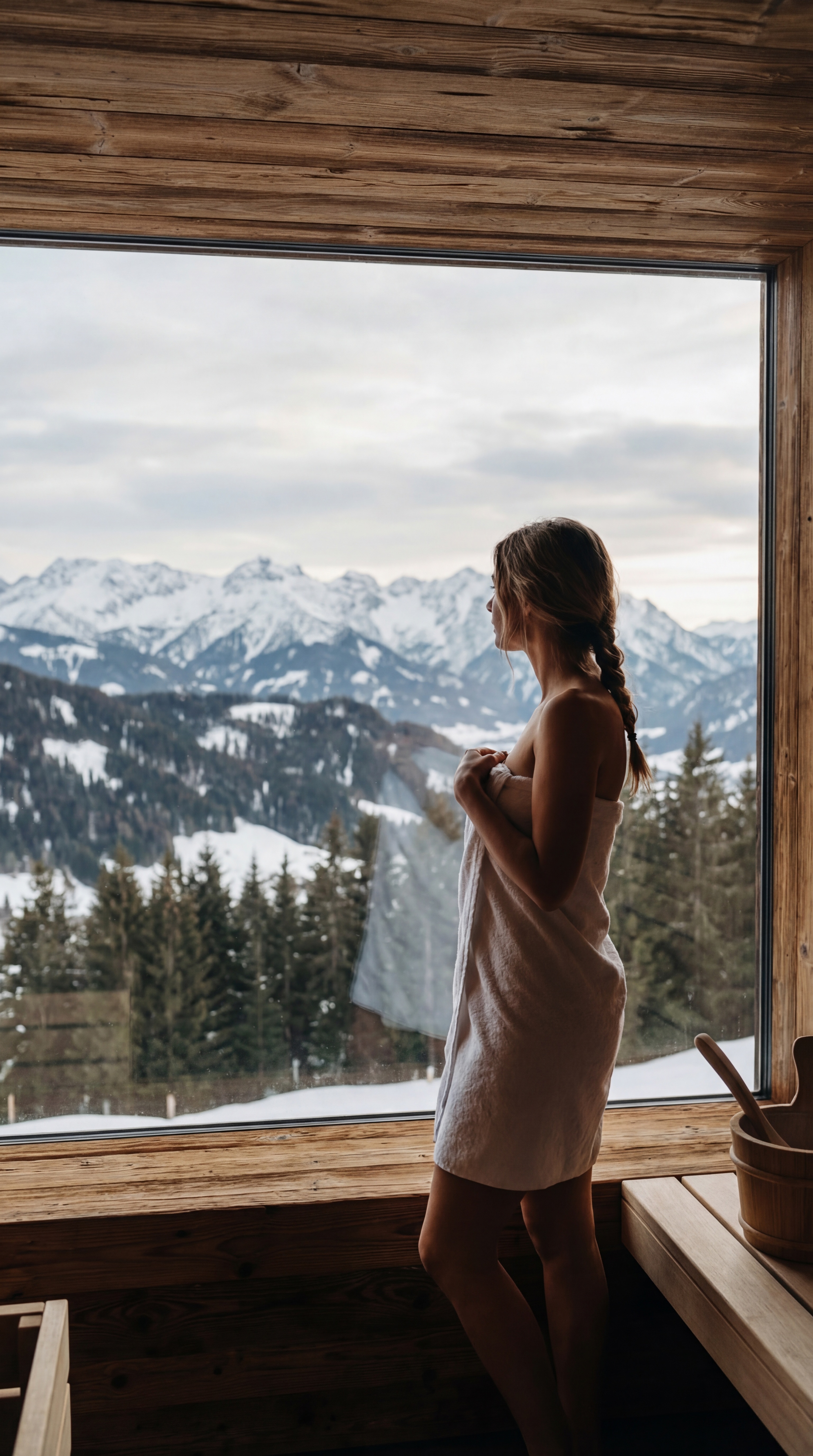
Barrel vs. Cabin Sauna: What Actually Holds Up in Manitoba
Barrel saunas photograph well and cost less to start. For occasional backyard use, that's often enough. For a sauna that gets used through a real Manitoba winter and still looks right in five years, a well-built cabin sauna usually wins — on comfort, durability, and resale.
Shape changes the experience, not just the look
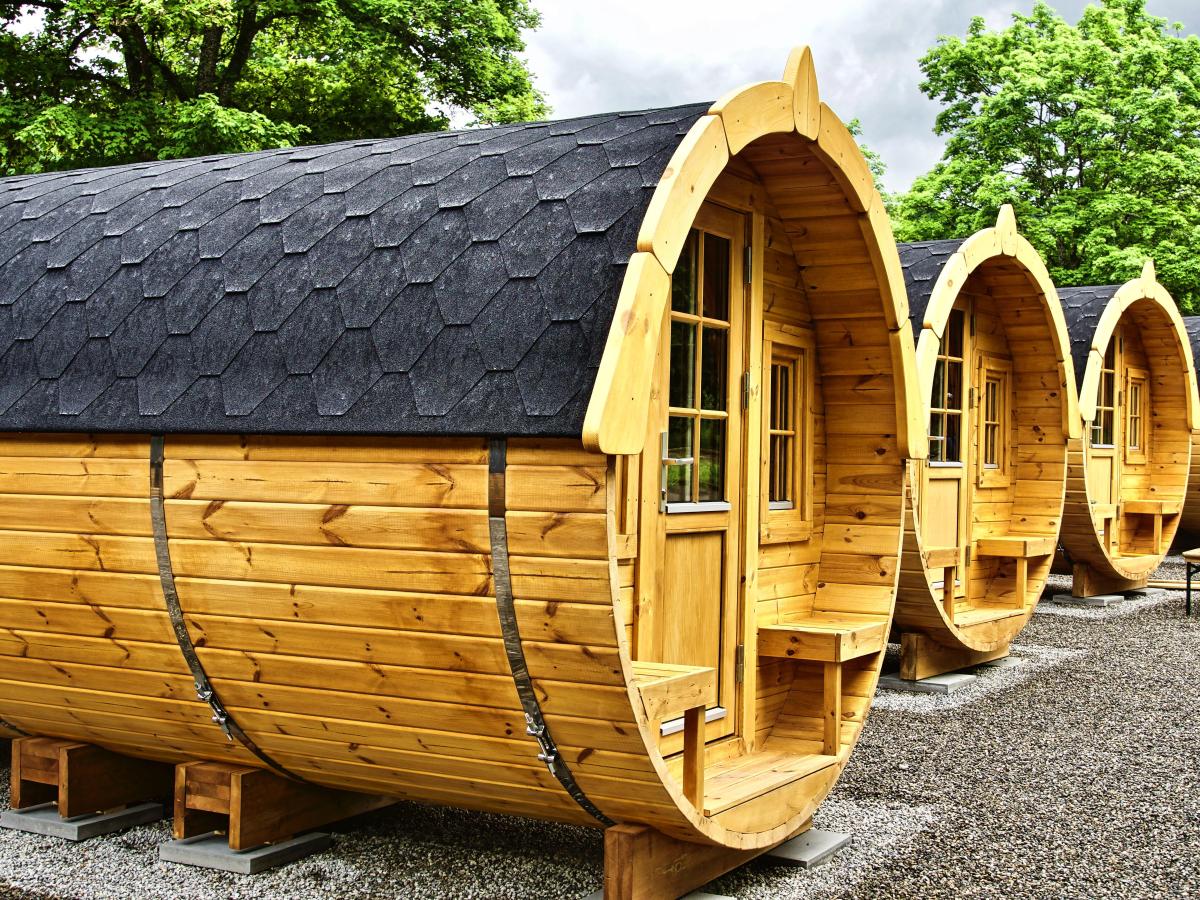
A barrel's curved walls create a compact room with less air volume, which is why barrel saunas often heat up fast. Heating fast isn't the same as bathing comfortably, though. Heat rises in a sauna, and the best heat sits higher in the room — sauna builders call this "feet above the stones," meaning your feet should stay high enough to be in the warmer air, not sitting low in the cool layer near the floor.
Curved walls make that hard to build for. Most barrel saunas end up with opposing side benches at one main height, which works for a casual sit but limits stretching out or lying down. A rectangular cabin gives the builder room to design higher and deeper benches, L-shaped layouts, backrests, and better heater placement — the room gets shaped around the body instead of the product. The American Sauna Society recommends at least six feet of width for lying down, and most well-designed layouts run the main upper bench along the longest wall to maximize it.
Shoulder room, bench depth, whether the heater crowds the space — none of that shows up in a backyard photo, but it's what determines whether the sauna gets used twice a week or twice a summer.
Cold climate construction exposes weak points
A barrel sauna is a simple assembly: curved staves, metal bands, end walls, a base. That simplicity is the appeal, and it's also where the risk lives. Wood moves with moisture — swells, shrinks, and shifts as it absorbs and releases it — and in Manitoba that cycle runs hard: heated air inside, deep cold outside, snow load, wind-driven rain, freeze and thaw on repeat.
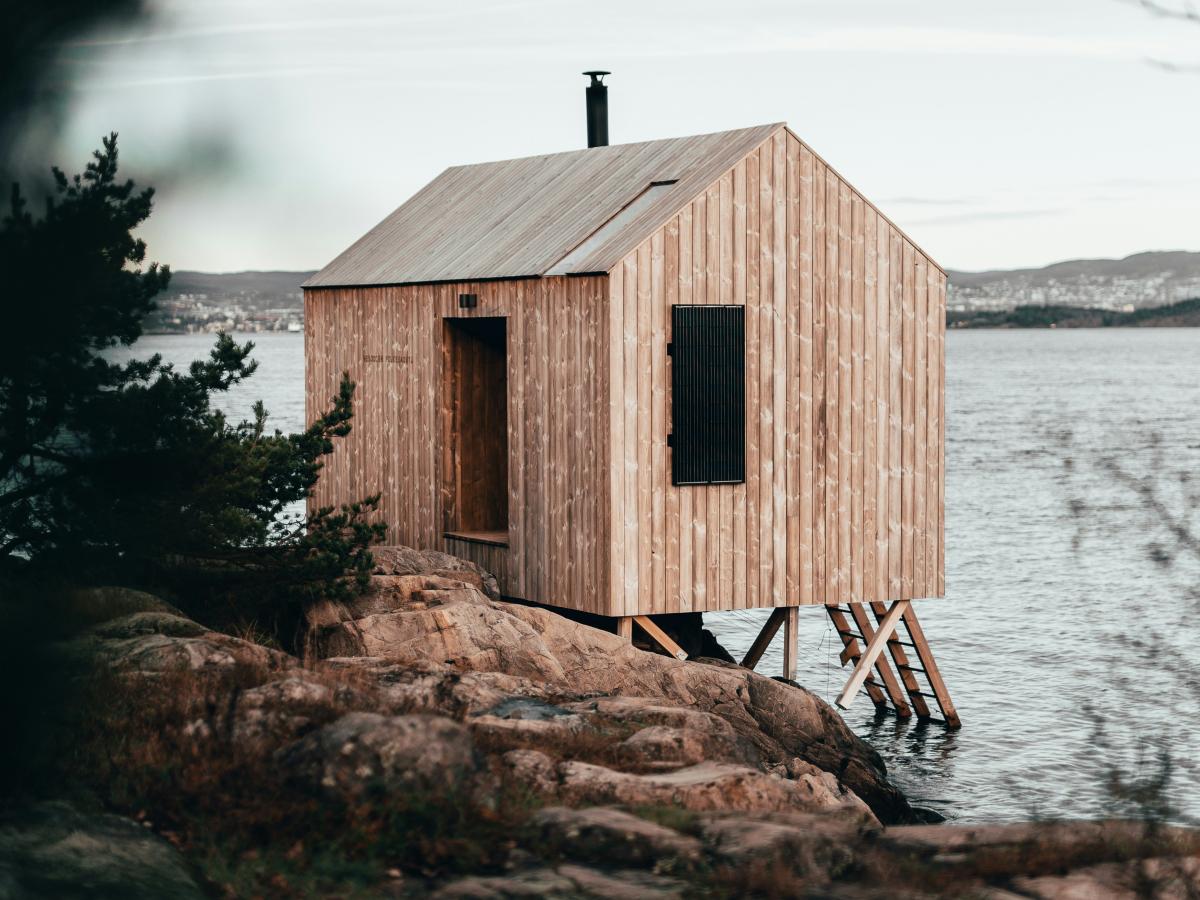
A cabin sauna gives the builder control over the whole envelope — roof system, wall assembly, insulation, air gap, cladding, flashing, ventilation, and foundation get engineered for that cycle instead of assumed. A barrel has fewer layers to work with, and its performance depends on the staves staying tight, the bands staying tensioned, and water actually shedding off a curved surface. Foundation problems hit either style — freeze-thaw, ground movement, and a poor base can sag supports, throw doors out of square, and rot wood at the bottom — but a cabin sauna is easier to set properly on piles, pads, or skids and protect with a real roof overhang. The exterior is what determines whether the sauna survives the climate; the interior room doesn't matter much if the outside fails first.
Aesthetics and resale go past the first photo
Barrel saunas have a strong, recognizable look and they photograph well. Whether that look actually fits matters more than the shape itself — whether it matches the house, sits naturally in the landscape, and reads as permanent rather than dropped into the yard.
A cabin sauna can be designed to match the home's architecture directly: matching cladding, clean rooflines, larger glass, a covered entry. That shows up at resale too. A barrel sitting loosely on a basic base can read to a buyer as movable personal property. A cabin sauna integrated into the yard reads as part of it — though a poorly built cabin is still a poor build; the shape alone doesn't guarantee the outcome. Architectural Digest has tracked home saunas as part of a broader wellness-home trend, with more attention going to placement, views, and material choices around the sauna itself, not just the heat inside it.
Which one to build
If the priority is lower cost, quick installation, and occasional use, a barrel sauna can be the right call — it's not a bad product, just a limited shape. If the priority is winter performance, bench comfort, durability, and long-term property value, a cabin sauna is the stronger direction, and in a cold climate the gap between the two widens fast.
At Turon Saunas, we build for what the sauna looks like in five years, not the first photo. That means asking how it sits on the property, how it sheds snow and dries after use, whether the benches actually feel good to sit on, and whether the exterior will still look intentional after a few winters. Those questions are harder to answer with a stock product — easier to answer with a build designed for the site it's going on.
