
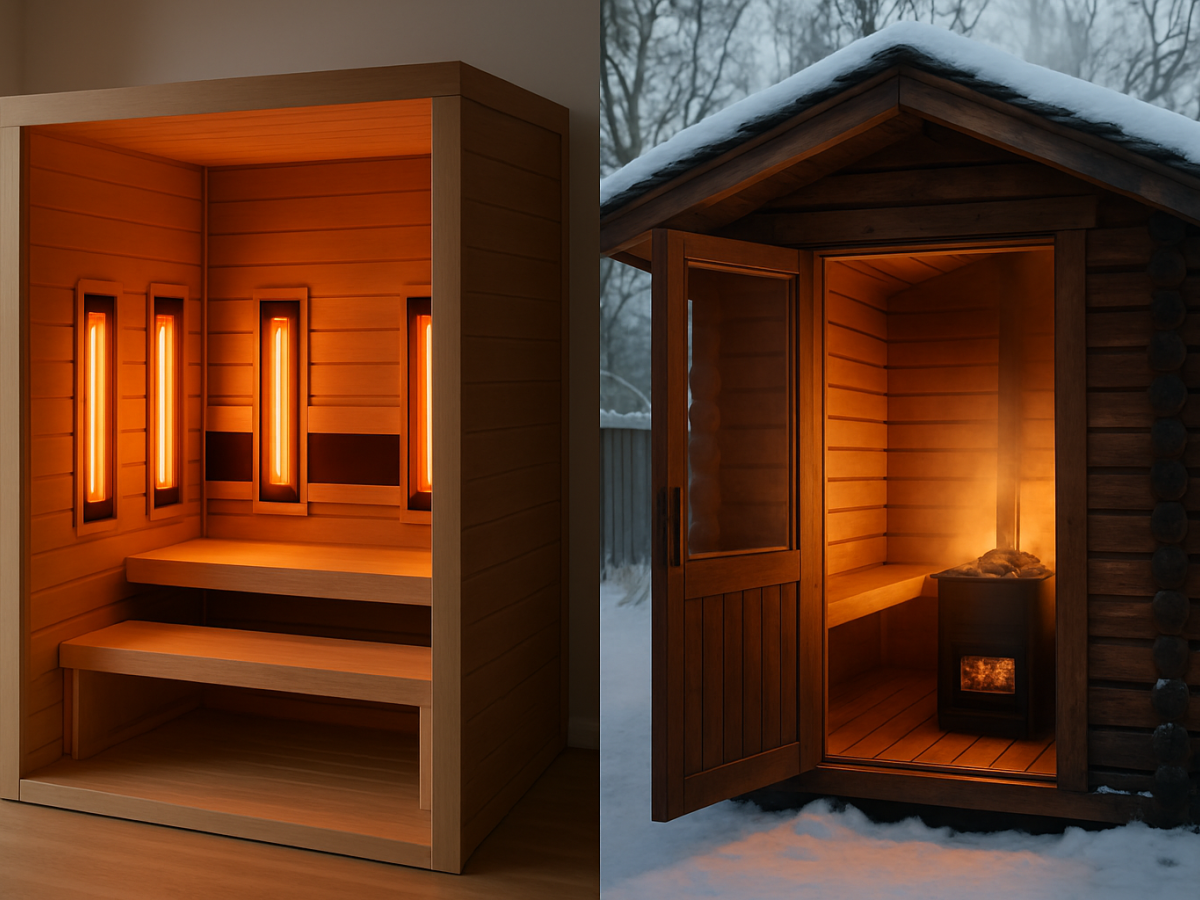
Comparing infrared and traditional sauna means comparing two different heat experiences, not two versions of the same product. Both can help you sweat, relax, and build a wellness routine at home, but they don't feel the same, install the same, or serve the same kind of buyer. The real question isn't which one is better in the abstract. It's which one is actually worth it for how you want to use it.
How the heat is created
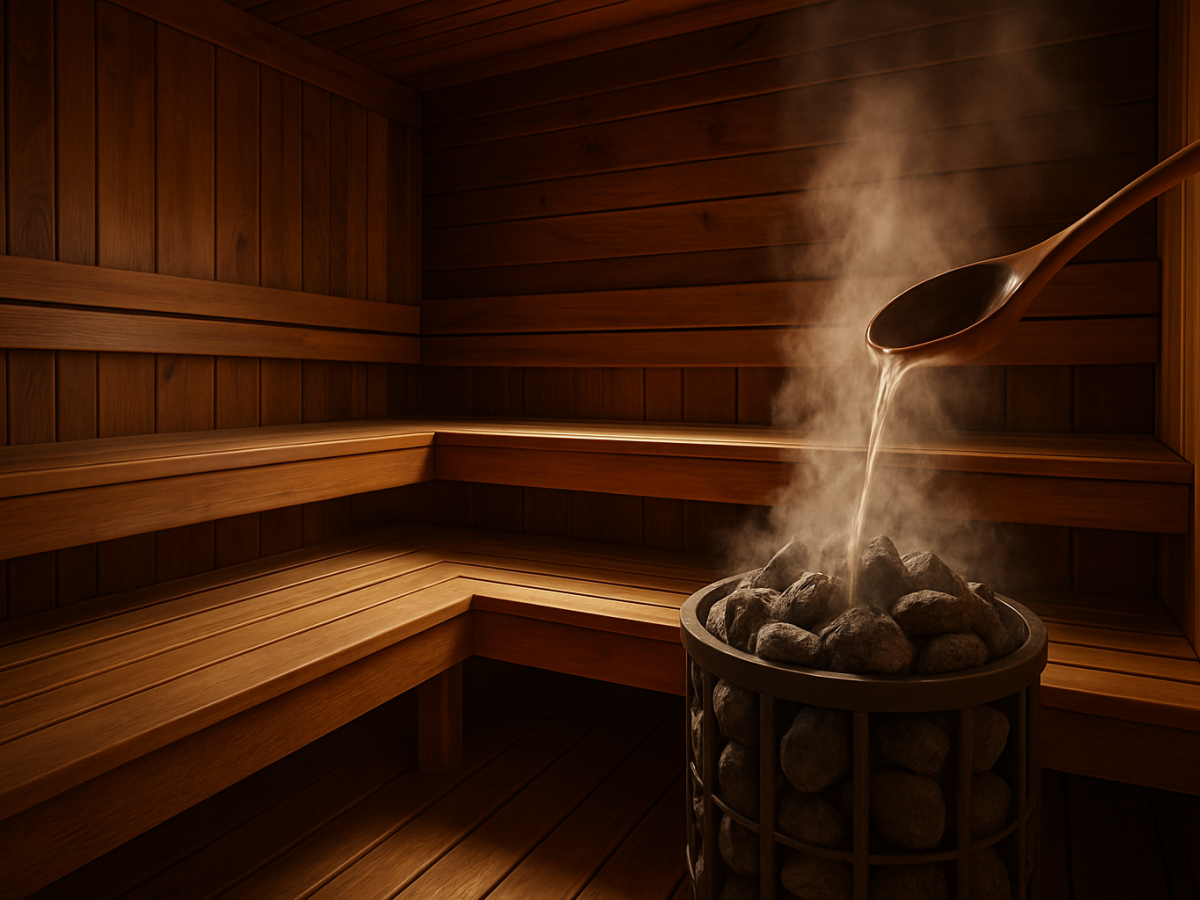
An infrared sauna uses panels or emitters to radiate heat directly at the body, so the air temperature stays lower even though you still feel warm. A traditional sauna heats the room itself, electric or wood-burning, warming the air and the stones, and when water hits those stones it creates steam and a wave of heat known as löyly. One directs heat at you. The other builds a hot room around you and lets you control how intense that room gets.
Infrared runs gentler and lower-temperature by design. Traditional runs hotter, more immersive, and more variable, especially once steam gets added to the mix.
The experience isn't the same thing as the heat
If you've never used a traditional sauna, it's easy to assume all heat therapy feels roughly the same. It doesn't. Infrared gives a milder, drier heat that a lot of people find more approachable, especially if intense heat isn't appealing or you want a quick session without preheating a full room.
A traditional sauna is a more complete experience. You're not sitting near a heat source, you're inside a room built around heat, airflow, wood, stone, and humidity, with control over löyly by how much water you throw on the stones. That control is a big part of why traditional sauna is still the benchmark for a lot of people. Infrared can make you sweat. Traditional sauna is the full ritual, and for a lot of people, that ritual is the actual reason they use it.
Cost, installation, and space
Infrared usually wins on simplicity. A lot of units are compact, cabinet-style products that fit into a basement, home gym, or spare room, often with simpler electrical needs. A traditional sauna asks for more: the right heater, proper clearances, ventilation, wall and ceiling assemblies, bench layout, and enough room for the heat to actually work. An outdoor traditional build adds real site planning, electrical or chimney coordination, and weather detailing on top of that.
If the goal is the fastest path to some form of heat at home, infrared looks attractive. If the goal is a real backyard sauna, a custom traditional build offers a lot more long-term value, especially outdoors, where infrared units aren't really designed to live.
What about health benefits?
Both infrared and traditional sauna users report relaxation, better recovery, stress reduction, and generally feeling better afterward, and those benefits are real at the lifestyle level. But the evidence behind them isn't equally established. Traditional sauna, especially Finnish-style use, has a much longer cultural and research history behind it. Infrared has real supporters, but the overall evidence base is thinner and less established. That doesn't make infrared useless, it just means a wellness headline about one doesn't automatically apply to the other.
Why traditional fits prairie contrast therapy better
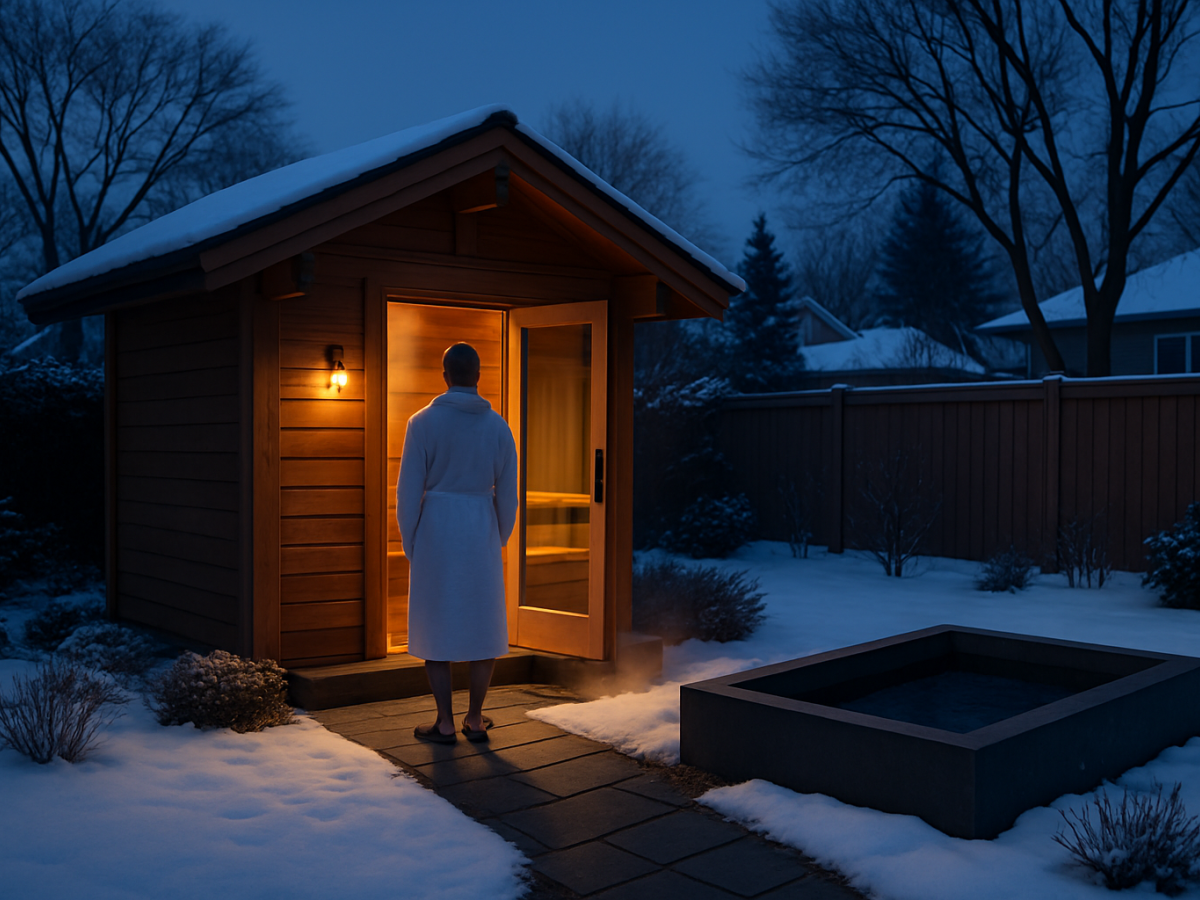
In Manitoba and across the prairies, sauna is often part of a bigger ritual: cold air, snow, a cold rinse or plunge, then back into serious heat. That's contrast therapy, and traditional sauna suits that rhythm better because the room gets hotter, the löyly adds real intensity and variation, and the whole environment is built around the hot-cold cycle. A traditional outdoor sauna in winter feels connected to the climate around it in a way that's physical and immediate. Infrared can warm the body, but it doesn't build the same atmosphere or heat depth, and it reads more like personal heat therapy than a full sauna ritual.
Which one is worth it
Infrared makes sense if you want lower-temperature heat, a compact indoor installation, and convenience over ritual, and you're looking for a quick-entry wellness product rather than a full sauna build.
Traditional makes sense if you want real heat, steam, and löyly, an outdoor sauna on your property, the ritual of contrast therapy, and something that feels architectural and permanent rather than a product you plug in.
The Turon view
We build traditional saunas because that's the experience we believe in, especially here. A well-built traditional sauna has more depth, more atmosphere, and a much stronger connection to outdoor living and contrast therapy than an infrared unit can offer. It's the room, the ritual, the heat, the steam, the wood, and the recovery together, not just the sweating.
If what you're after is relaxation and recovery in general, infrared is a legitimate way to get there. If what you're after is the real thing, traditional sauna is usually the better investment.
