
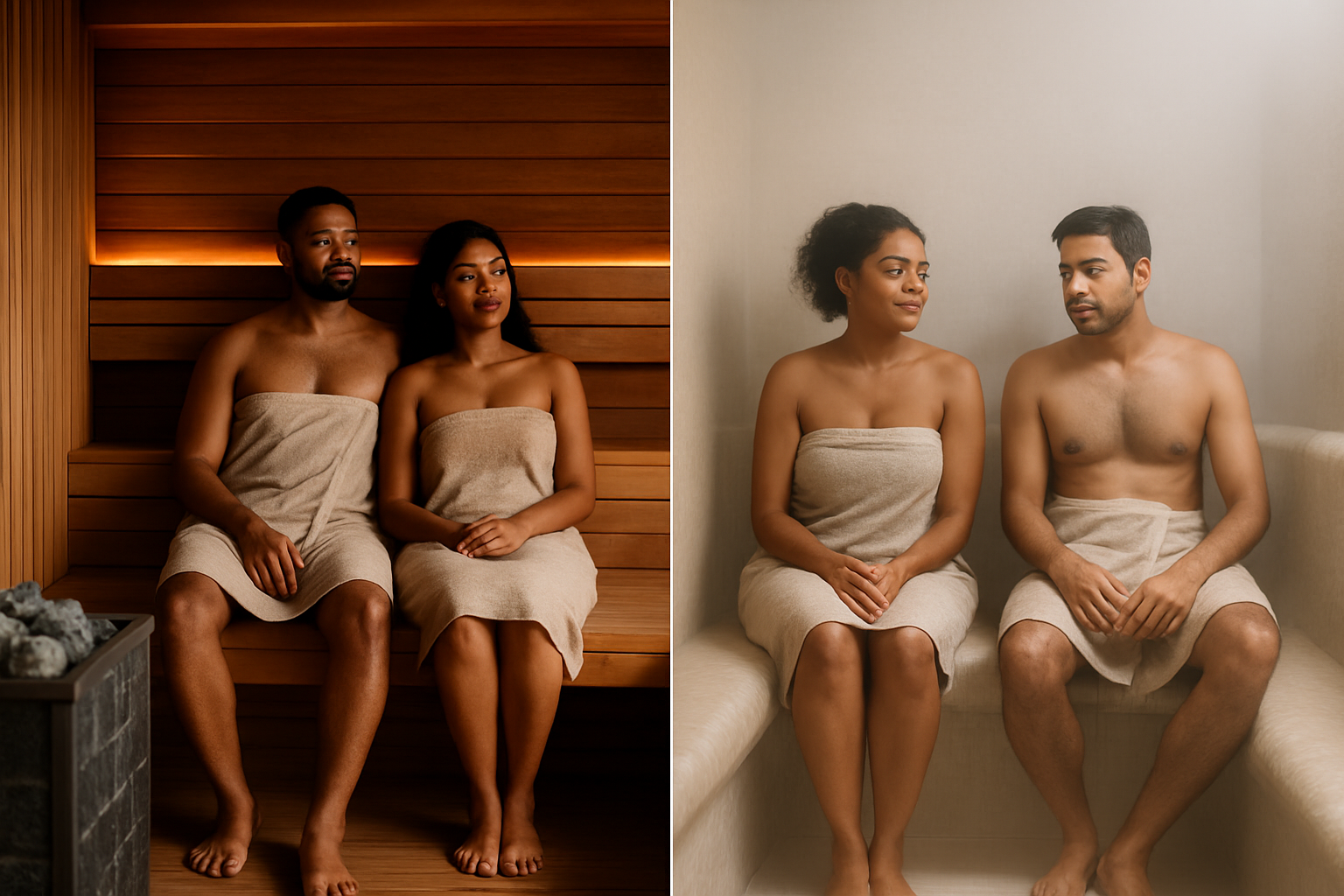
Comparing a sauna to a steam room usually comes down to one real question: which one will actually feel better and make sense for your home? Both are heat-based wellness spaces that help people relax and sweat, but the experience, construction, and maintenance are very different. For most Manitoba homeowners, especially anyone thinking about an outdoor wellness space, sauna usually makes more sense. That doesn't mean steam rooms are bad. It means they serve a different purpose.
Dry heat vs. wet steam
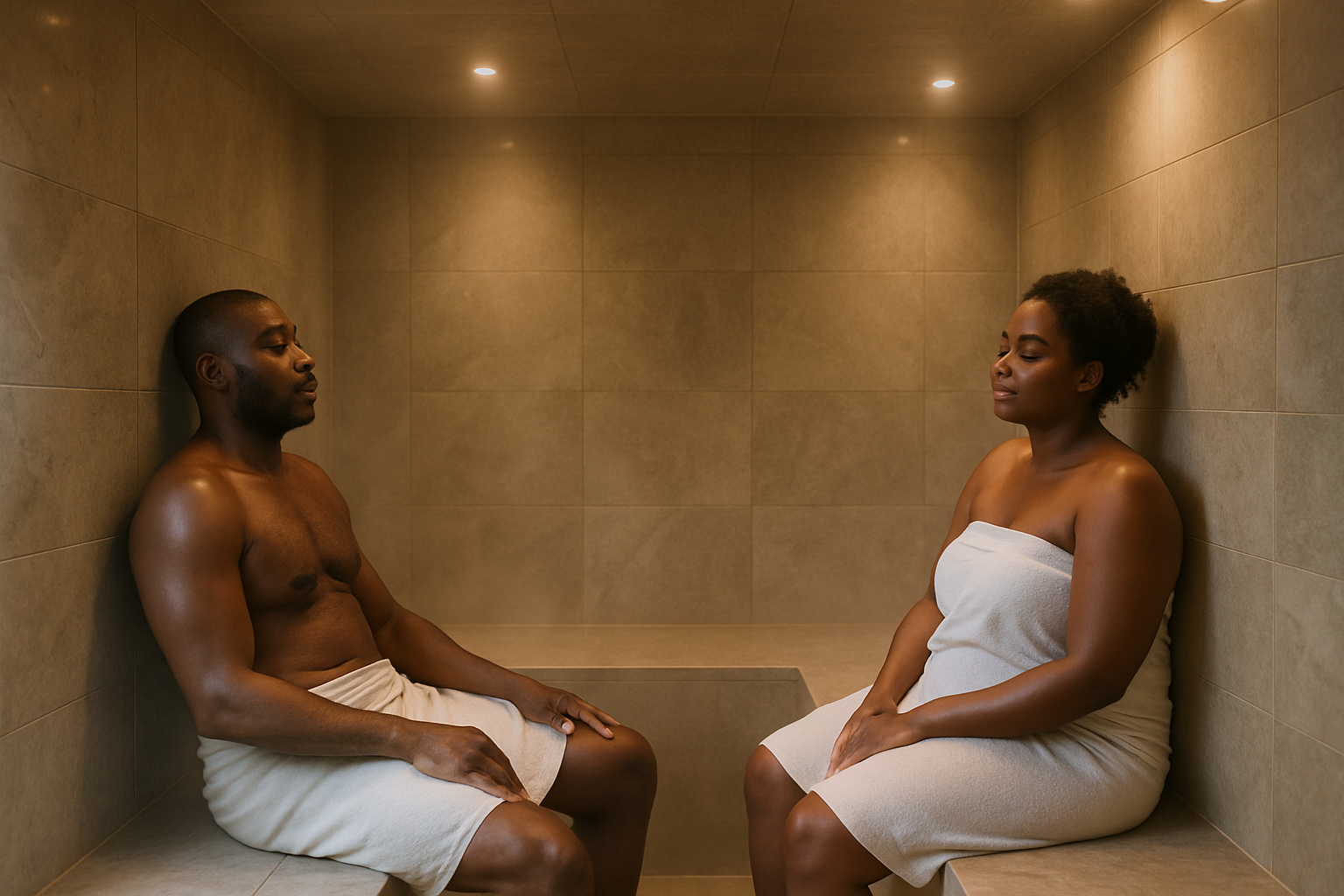
The biggest difference is the type of heat. A traditional sauna runs dry heat at a much higher temperature and lower humidity. Cleveland Clinic notes saunas commonly run around 150°F to 195°F, while steam rooms sit cooler, often 110°F to 120°F, but at very high humidity, often near 100%.
A sauna feels hot, clean, and intense, with heat surrounding the body, and pouring water on hot stones adds bursts of steam, löyly, giving you real control over humidity and sensation. A steam room feels softer in temperature but heavier in the air, built entirely around moisture instead of dry heat and wood. If you want strong heat, a hot-cold contrast, and a traditional sauna ritual, sauna wins. If you want gentler temperatures and moist air, a steam room may suit you better.
Health benefits point the same direction, with different strength behind them
Both are commonly used for relaxation, circulation, and general wellness. Cleveland Clinic notes both can support relaxation, temporarily increase circulation, and help some people feel better physically and mentally afterward, and steam can feel helpful for people who like humid air when congested.
The research base isn't equal, though. The strongest long-term research covers traditional Finnish-style sauna bathing, not steam rooms. Reviews of the evidence and major observational studies have linked regular sauna use with cardiovascular and all-cause mortality associations, though those are associations, not proof of direct causation. Steam rooms may feel just as good and offer real comfort value, but if you're asking which one has the more established evidence behind it, sauna has the stronger case. Sauna carries the deeper research tradition. Steam room offers a different comfort profile that appeals to people who genuinely prefer humid heat.
Build and maintenance look very different
A sauna is a hot room that still needs careful detailing, ventilation, drying, and material selection. A steam room is built around constant wet heat and full humidity saturation, which means the room has to be built almost entirely around waterproofing, moisture containment, drainage, and non-absorbent materials. The CDC notes mold grows wherever moisture problems exist and that controlling moisture is the key to preventing it. That doesn't mean every steam room turns into a mold problem, but it does mean there's a lot less margin for error. A steam room typically needs a specialized interior envelope: tile, waterproof membranes, sloped surfaces, a construction approach built entirely around moisture control. A sauna still needs real building science, but it dries differently and builds naturally in wood, with a lower maintenance burden over time.
Cost and feasibility at home
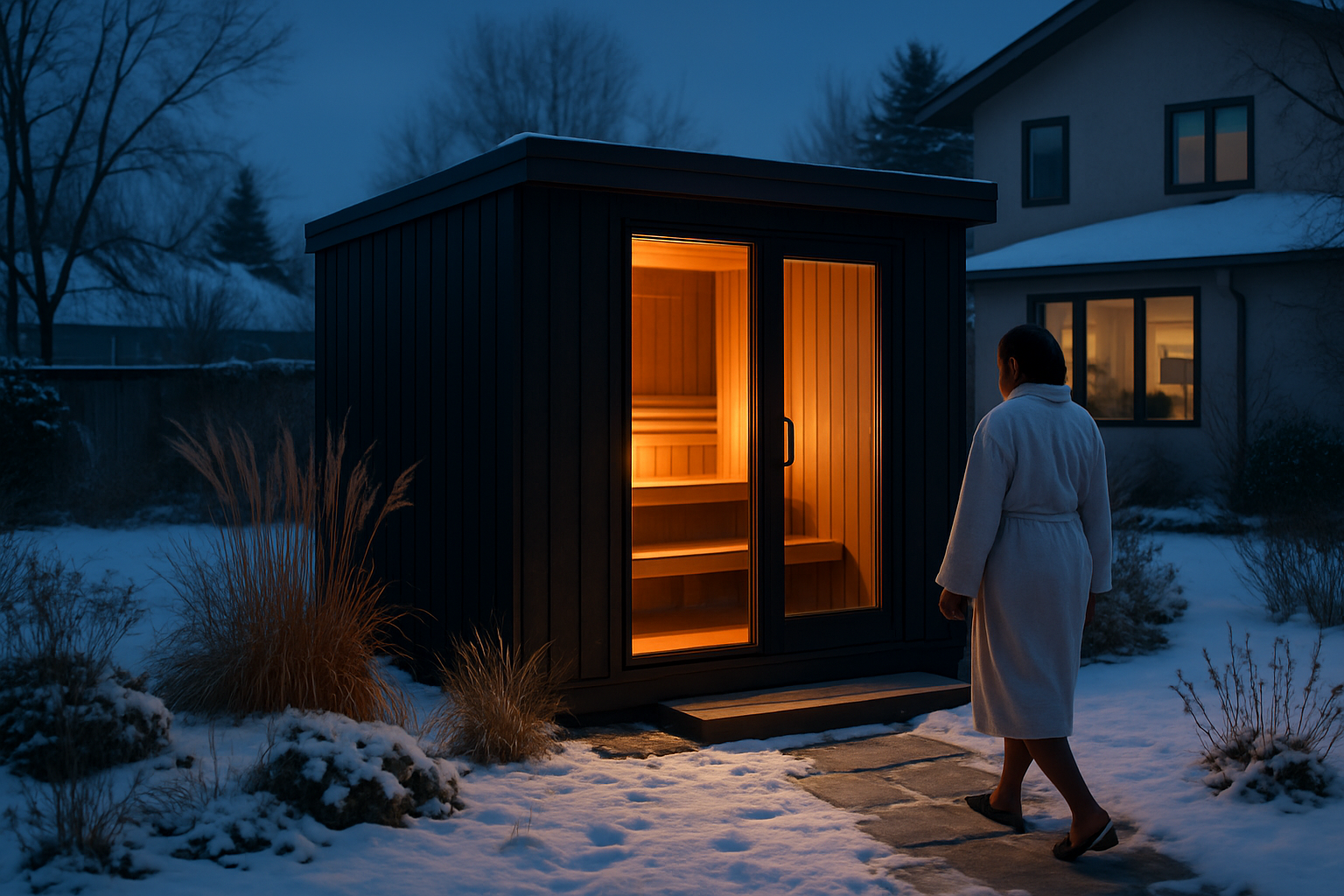
A home steam room is usually more practical indoors, where the space can be fully waterproofed, tiled, drained, and ventilated correctly, so it tends to fit best into a bathroom or spa-style interior renovation. A home sauna is more flexible. It works indoors, but it's also well suited to a standalone backyard structure, which matters in Manitoba, where a lot of homeowners want a wellness space that stands apart from the house and works through every season.
Why sauna suits backyard, cold-climate use better
In a Manitoba winter, what people usually want isn't just heat, it's the full rhythm: cold air, snow, a cold rinse or plunge, then back into serious heat. That's contrast therapy, and sauna suits it far better than a steam room. A steam room is humid, enclosed, and inherently indoor in character. A traditional outdoor sauna feels connected to the environment around it and works naturally with winter, and the swing from hot to cold to hot again feels intentional and tied to outdoor living in a way steam can't replicate. Backyard saunas work with the climate instead of fighting it.
Which should you choose
Want moist air, a lower room temperature, and an indoor spa-style environment? A steam room may be the better fit. Want stronger heat, a more established research tradition, real suitability for outdoor living, and a practical backyard structure in Manitoba? Sauna usually makes more sense, especially if outdoor use, contrast therapy, cold-climate performance, and long-term simplicity matter to you.
The Turon view
Steam rooms have their place. But for most homeowners around Winnipeg and Manitoba exploring heat therapy at home, a traditional sauna tends to be the more practical, longer-lasting investment. It works with the climate, fits naturally into a backyard, supports a real ritual, and can be built as a durable, good-looking part of the property instead of a complex wet-room enclosure. That's why we build saunas, not because steam rooms have no value, but because a properly built outdoor sauna is usually the better answer for the way people actually want to use their backyard here.
